


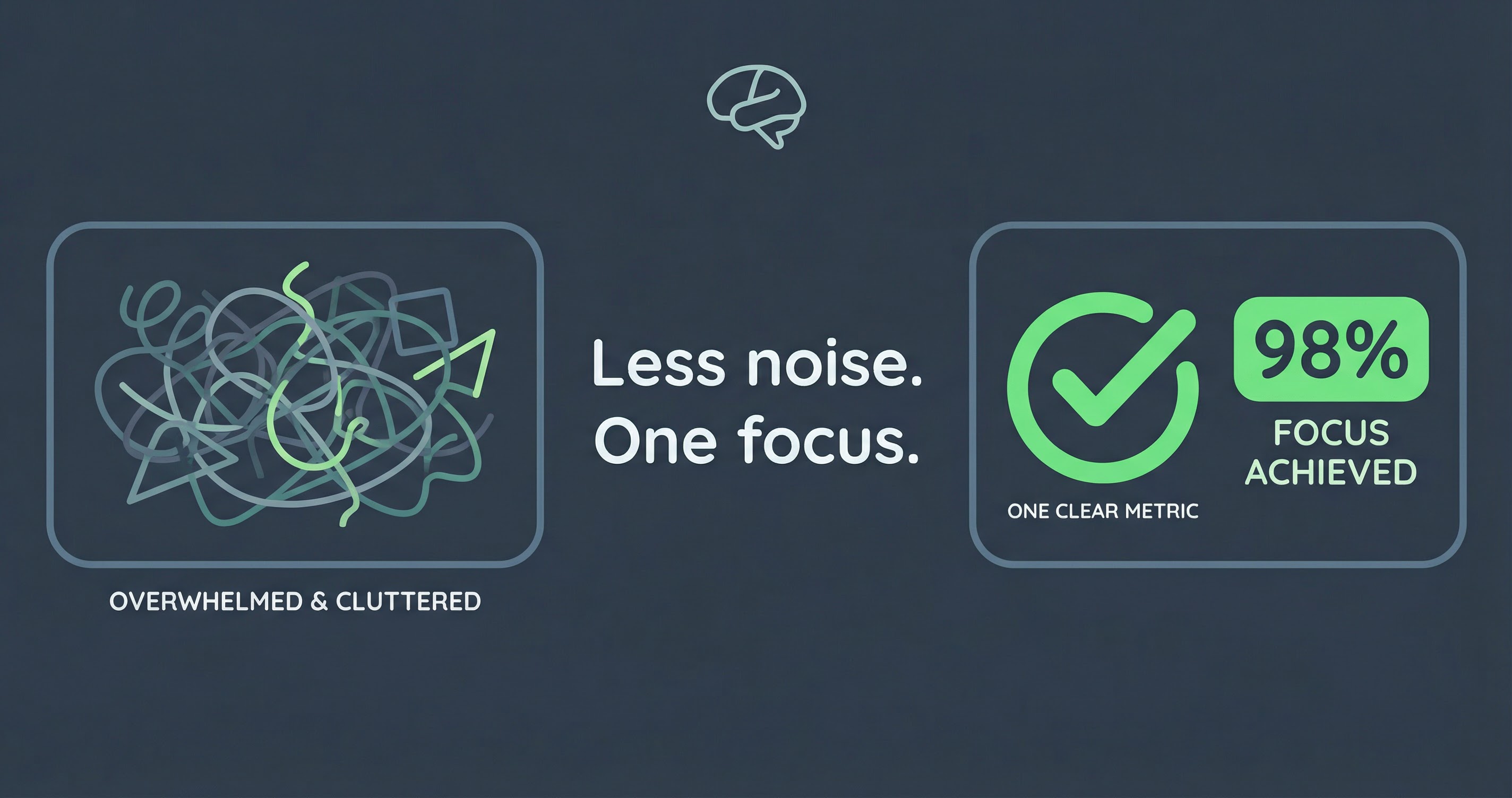
The problem with "powerful" analytics
Tools like Google Analytics are built for scale and flexibility. That sounds great until you're the one responsible for making sense of it. Custom dimensions multiply. Dashboards pile up. Nobody owns them. The backlog of "someday we'll look at that" grows faster than your team.
For product teams, power often means noise. You get a thousand ways to slice the data and no clear answer to "did that feature we shipped last week actually get used?" The people who need to decide what to build next are the same people who don't have time to become analytics experts. So they either guess or they ignore the data. Neither is a good outcome.
We've seen it over and over: a team adopts a "powerful" platform, configures a few things at launch, and then the configuration drifts. New events get added without a plan. Old ones never get cleaned up. When someone finally asks a product question, the answer is buried in a maze of segments and filters. By then, the moment to act has passed.
What product people actually need
Product people need a short list. Behavior around the things you ship. Drop-off in key flows. A way to tie numbers back to releases. No SQL, no ticket to another team, no waiting for "the data person" to have bandwidth.
The questions are simple. Did that change work? Where do people get stuck? Who uses this and who doesn't? You don't need a data warehouse to start answering them. You need a tool that's built for those questions from the ground up.
That means a small set of metrics that map to the decisions you actually make. It means seeing the numbers that move when you ship, and a way to log what you shipped so you can connect cause and effect. It means one place the team looks, on a cadence that fits how you work. Weekly beats never, and "a few numbers we own" beats "a dashboard nobody maintains."
Why we built AppFit
We kept running into the same gap: teams shipping features with no clear picture of use. They had analytics somewhere. They had a product journal in Notion or a spreadsheet. They had weekly meetings where someone was supposed to "pull the numbers." It never quite came together.
AppFit is built for the people making product decisions every day. One focus at a time. A handful of metrics that matter for that focus. A weekly summary so the team stays aligned. A product journal so when the numbers move, you know what shipped or changed. No custom dimensions to maintain. No dashboards that become wallpaper.
We're not trying to replace the big platforms for the teams that truly need them. We're building for the rest: small teams, PMs without a dedicated data partner, and anyone who's tired of maintaining analytics instead of acting on them.
When to simplify
If you're spending more time maintaining analytics than acting on them, it's time to narrow the tool and the question set. That might mean turning off half the dashboards. It might mean picking one tool and sticking to it. It might mean accepting that you'll answer five questions really well instead of fifty poorly.
The goal isn't to have less data. It's to have less noise. When the right number is in front of the right person at the right time, decisions get better. When the right number is buried in a report nobody opens, nothing changes. Simplifying is the first step toward actually using what you have.


